The Future of Fashion Isn’t Cotton… It’s Grown in a Lab

The Shift Has Begun

Besides all negative aspects, the fashion industry has a notable achievement, which is the material revolution.
For decades. Though still cotton is the most populer of for fashion, there are some other sustainable options available to choose from. When conventional cotton, polyester, and leather materials linked to water overuse, fossil fuels, and animal impact, those new option can be better alternative for our planet with out compormising fashion , aesthetics, and comfort.
Now, science is trying to find out the alternatives and reduce the cotton dependency.
Innovators and brands like Pangaia are developing next-generation materials that are not only sustainable but also quite scalable.
Let’s find out what Next-Gen Materials are.
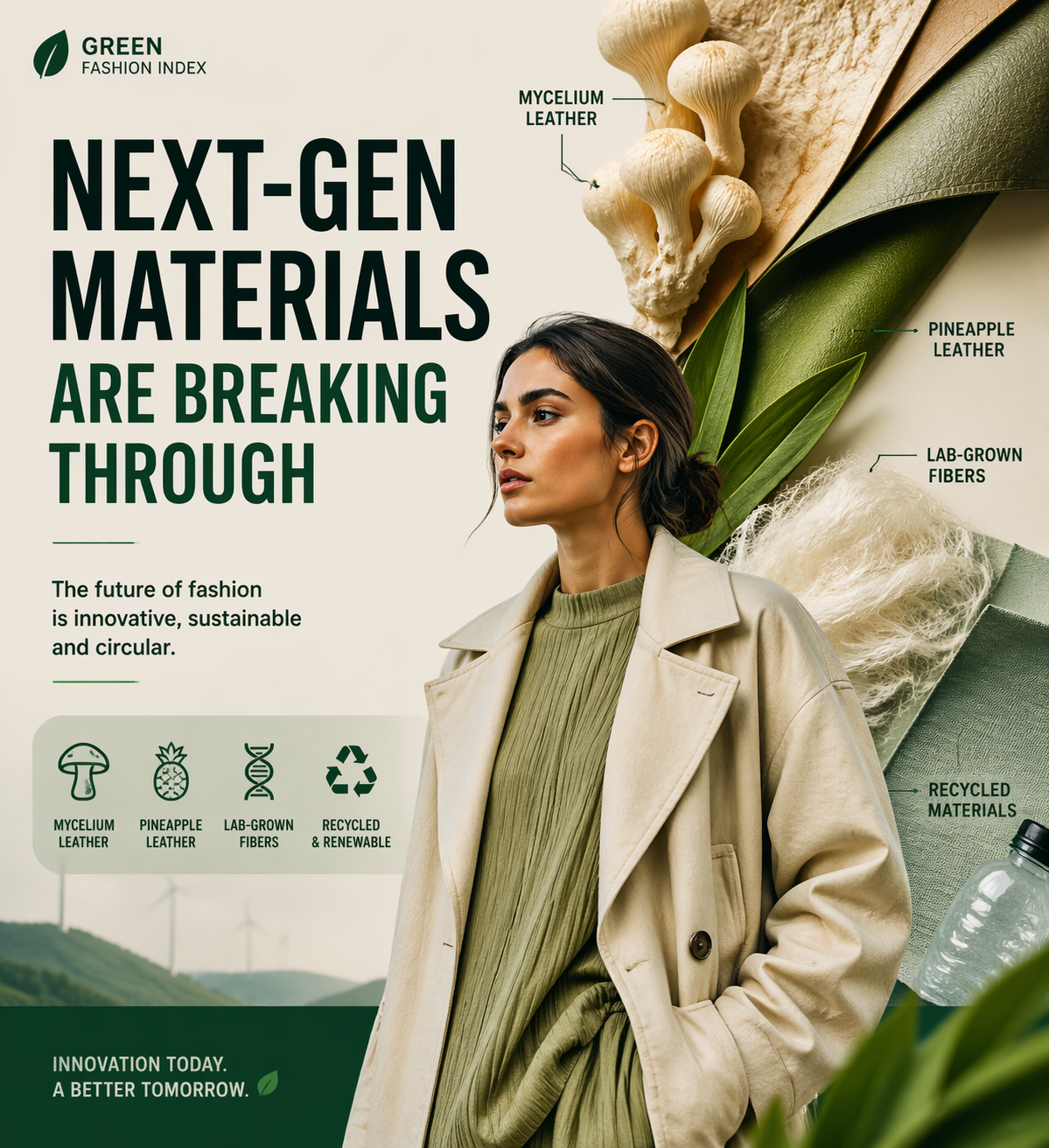
Next – Generation Materials are mostly fabrics created using biotechnology, waste streams, or renewable natural sources.


Key innovations include:

  • Mycelium leather – grown from mushroom roots
  • Piñatex – made from pineapple leaf waste
  • Lab-grown fibers – engineered at molecular level
  • Recycled bio-materials – turning waste into textile
 
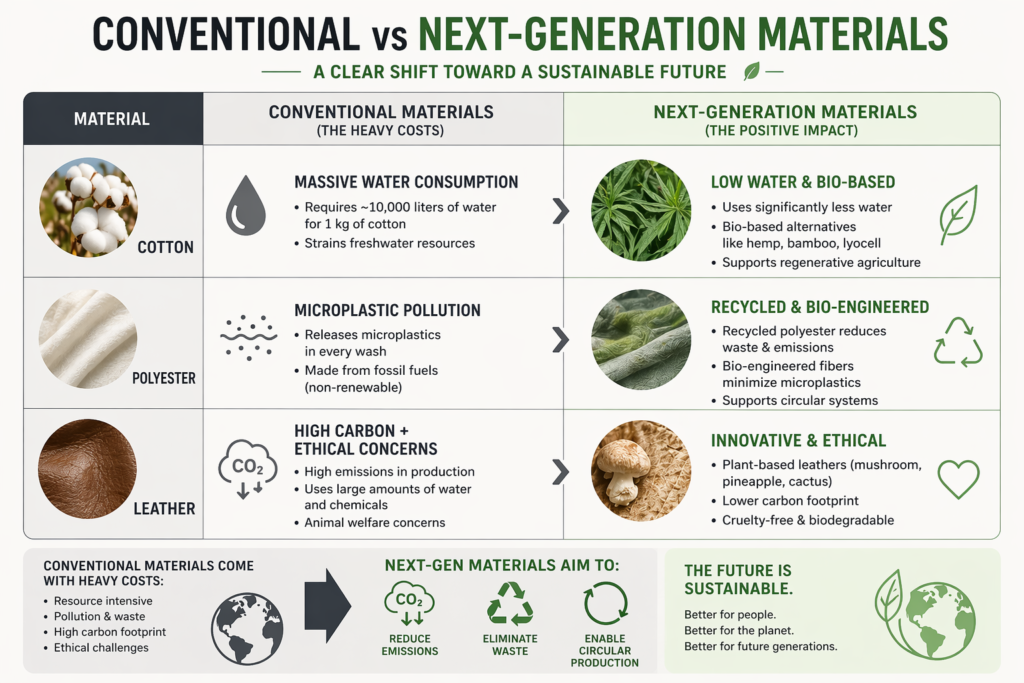
Conventional vs next generation material 

The Big Opportunity

The global shift toward these materials is accelerating because:

  • Investors are funding biofabrication startups
  • Consumers demand eco-friendly alternatives
  • Regulations (like in the EU) push transparency

This is no longer experimental—it’s becoming commercial reality.

The Future of Fashion

Imagine a world where fashion no longer harms the planet—but actively restores it.

A future where clothes are grown, not manufactured.
Where materials are cultivated in labs or harvested from nature with minimal resources and zero waste.

A future where waste itself becomes the raw material—old garments, ocean plastics, and agricultural byproducts transformed into high-quality textiles, closing the loop completely.

And most importantly, a future where fashion operates with a near-zero environmental footprint—no excessive water use, no toxic chemicals, no unnecessary emissions.

This is not science fiction anymore.
With rapid advancements in biofabrication, recycling technologies, and material science, this transformation is already underway.


The future of fashion isn’t coming. It’s already being built
Leave a Reply

Your email address will not be published. Required fields are marked *